Best Shoe Racks | Top Recommendations
Introduction
Shoe racks are a practical way to keep footwear organized while making better use of entryways, closets, bedrooms, and other areas around the home. They can help reduce clutter by providing a dedicated place for shoes, sneakers, boots, sandals, and other footwear. Available in compact, vertical, expandable, and multi-tier designs, shoe racks can accommodate different household sizes and available spaces.
The best shoe racks are made from materials such as metal, wood, engineered wood, plastic, and fabric, with each option offering different benefits in terms of durability, appearance, weight, and maintenance. Some models include adjustable shelves, stackable sections, doors, drawers, or bench seating for additional functionality.
When choosing a shoe rack, consider its capacity, dimensions, material, stability, shelf spacing, assembly requirements, and overall design. It is also important to select a rack that fits your available space and can comfortably hold the types of footwear you use most often. In this guide, we’ll explore some of the best shoe racks and their key features to help you find the right option for your home.
How We Choose Products
- We evaluate products using relevant specifications, features, design, materials, functionality, ease of use, intended use and overall value.
- Our recommendations are based on information available from manufacturers, retailers and other publicly available sources, along with our own editorial analysis.
- We aim to present product information accurately and distinguish manufacturer or retailer claims from our independent assessment.
- We do not claim to have personally tested a product unless we have hands-on experience with it. When we have not personally tested a product, our evaluation is based on available product information and careful editorial research.
Top Shoe Racks


Comparison
| Image | Type | Material | Dimensions | Tiers | Capacity | Weight Capacity | Adjustable / Expandable | Stackable | Design / Shelf Type | Assembly | Best For | Buy |
|---|---|---|---|---|---|---|---|---|---|---|---|---|
 |
3-Tier Long Shoe Rack | Heavy-Duty Metal | 43 × 11.4 × 24.4 in. | 3 | Up to 24 Pairs | Up to 50 lb | Adjustable |
Yes 2 Units Stack into 6 Tiers |
Wide Wire-Grid Shelves Open Storage | Easy Installation |
Large shoe collections, entryways, closets, garages, mudrooms & family footwear | Check On Amazon |
 |
Expandable 2-Tier Shoe Rack |
Heavy-Duty Coated Metal | 11.6 × 30.5 × 17.1 in. | 2 | Up to 8 Pairs | Up to 200 lb |
Expandable Width: 18.6–30.5 in. Height Adjustable |
Yes Up to 10 Tiers |
Dense Mesh Wire Shelves Adjustable Feet | Easy Assembly |
Closets, entryways, garages, apartments, dorm rooms, boots, heels & sneakers | Check On Amazon |
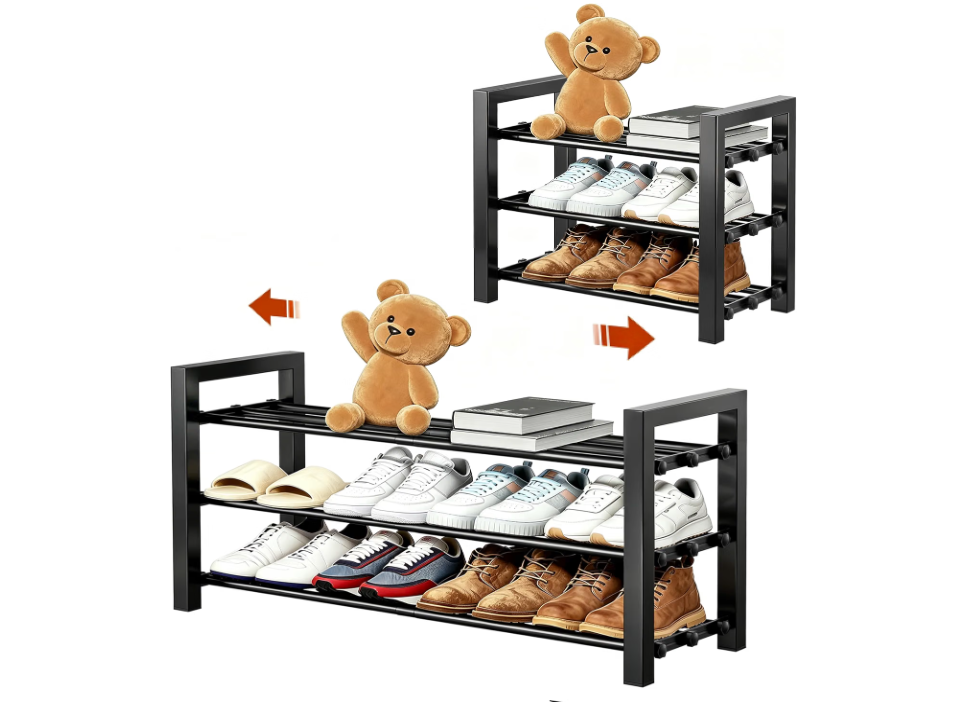 |
3-Tier Expandable Shoe Rack | Heavy-Duty Iron | 31 × 10 × 16 in. | 3 | 12+ Pairs | Up to 150 lb |
Adjustable Width: 17–31 in. | Yes |
Step-Style Round-Tube Shelves Non-Slip Rubber Caps |
Easy, Tool-Free Assembly |
Closets, entryways, bedrooms, doorways, compact spaces, shoes & boots | Check On Amazon |
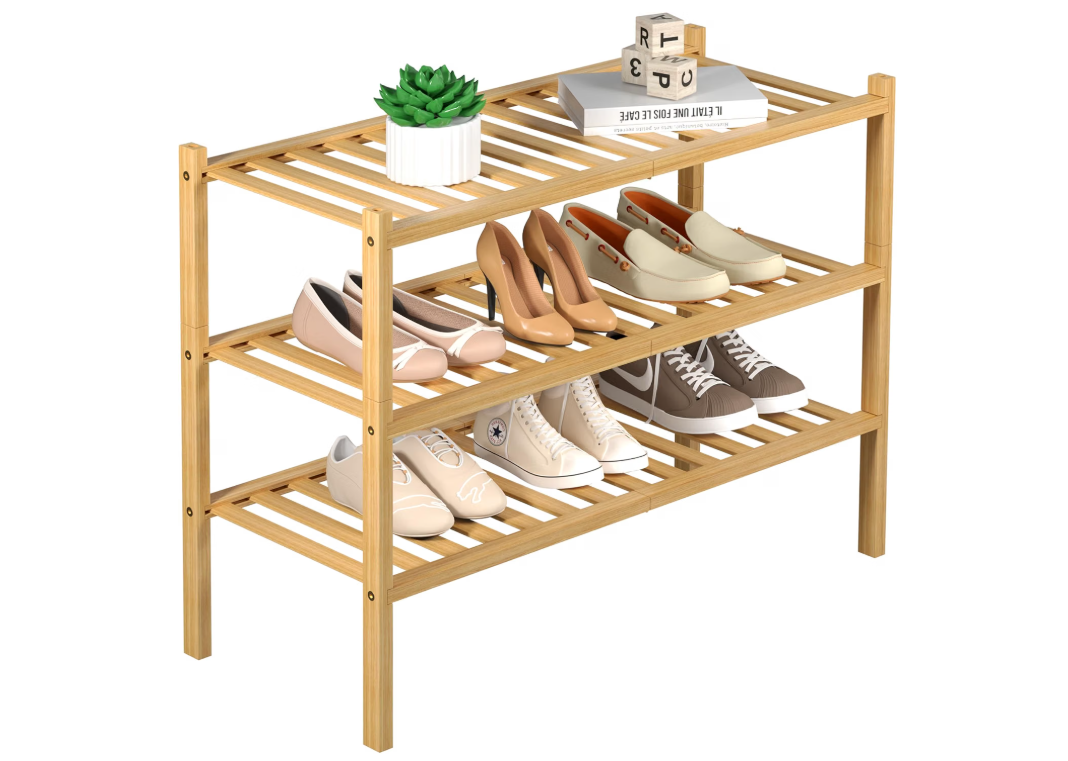 |
Freestanding Shoe Rack | Carbonized Bamboo | 27 × 11 × 20 in. | 3 | Up to 9 Pairs | Up to 90 lb | No |
Yes Up to 6 Tiers with Two Units |
Open-Shelf Design Natural Bamboo Finish |
Easy Assembly About 10 Minutes |
Small entryways, closets, apartments, bedrooms, dorm rooms & small spaces | Check On Amazon |
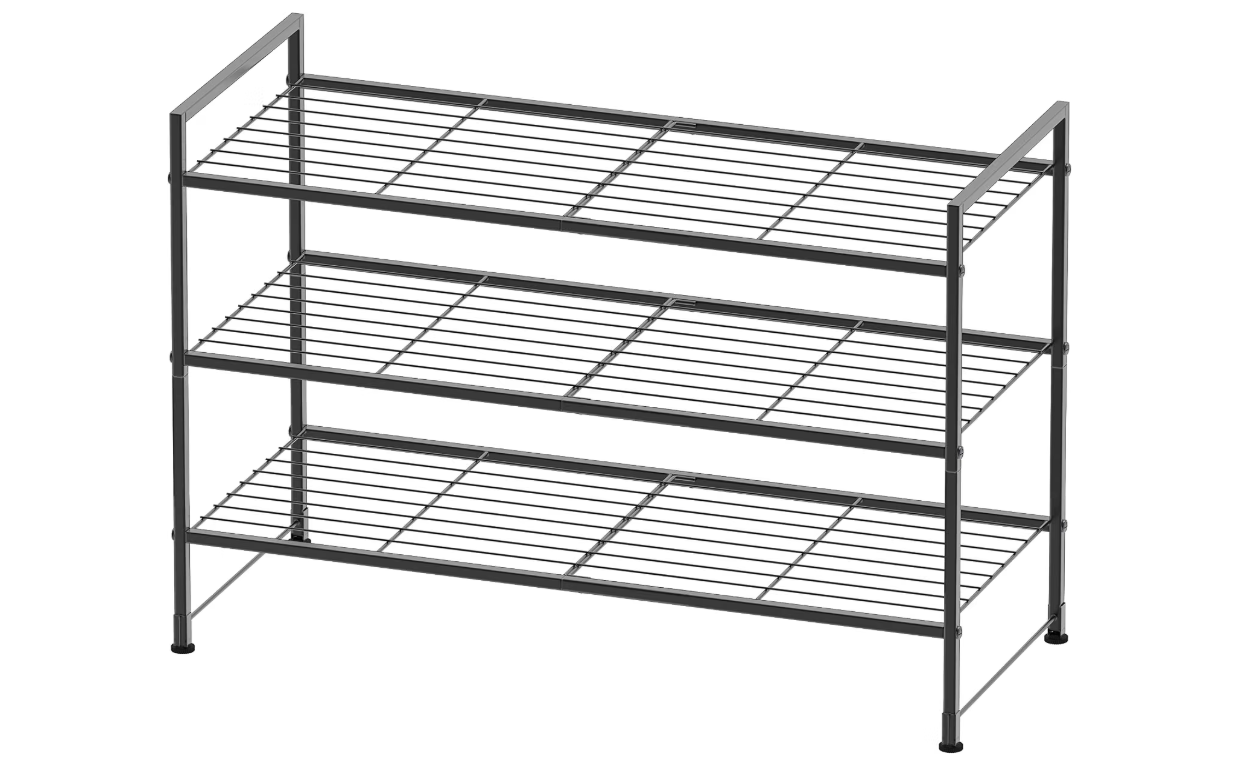 |
3-Tier Stackable Shoe Rack | Metal with Wood Top | 10.6 × 26.5 × 19 in. | 3 | Up to 9 Pairs |
Up to 30 lb/Shelf 90 lb Total | No | Yes |
Wired Grid Panel Wood Top Shelf | Assembly Required |
Everyday footwear, entryways, closets, garages, mudrooms & space-saving storage | Check On Amazon |
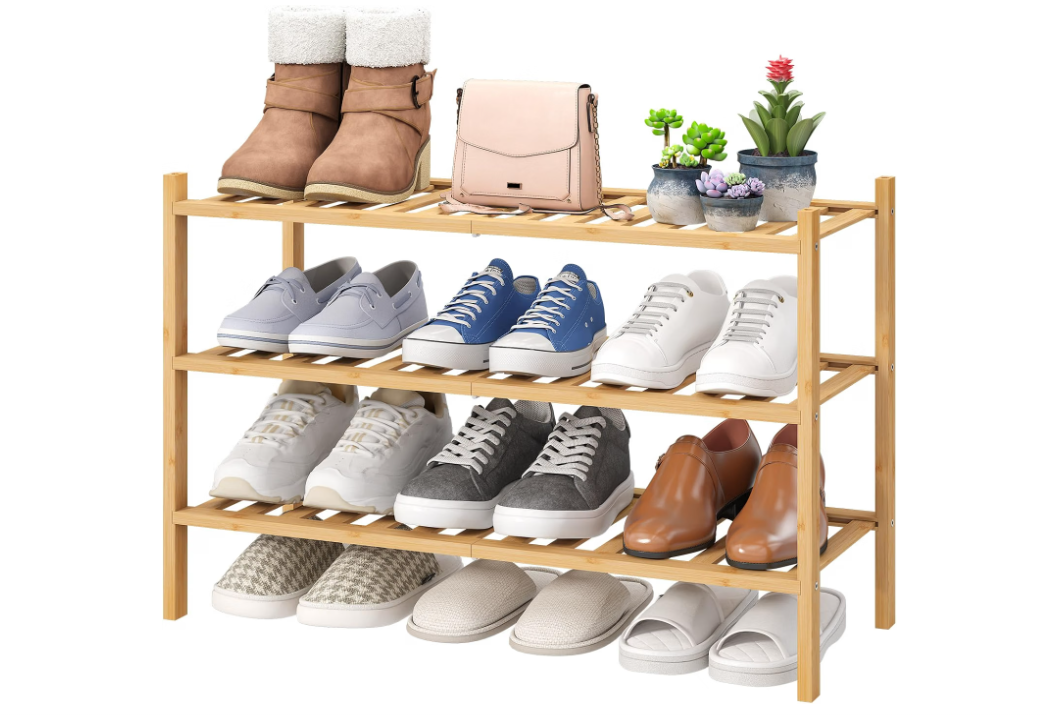 |
3-Tier Freestanding Shoe Rack | Solid Bamboo Wood | 26.9 × 11 × 18.3 in. | 3 |
Up to 9 Pairs 3 Pairs/Tier | Not Specified | No |
Yes Two Units Form 6 Tiers |
Tiered Open Shelves Natural Bamboo Finish |
Easy Assembly Tenon-Joint Design |
Small entryways, closets, bedrooms, apartments, dorm rooms & organized storage | Check On Amazon |
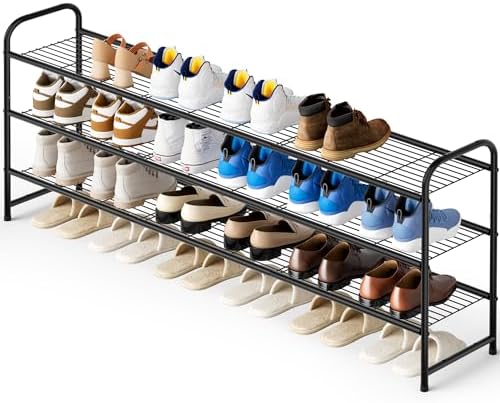
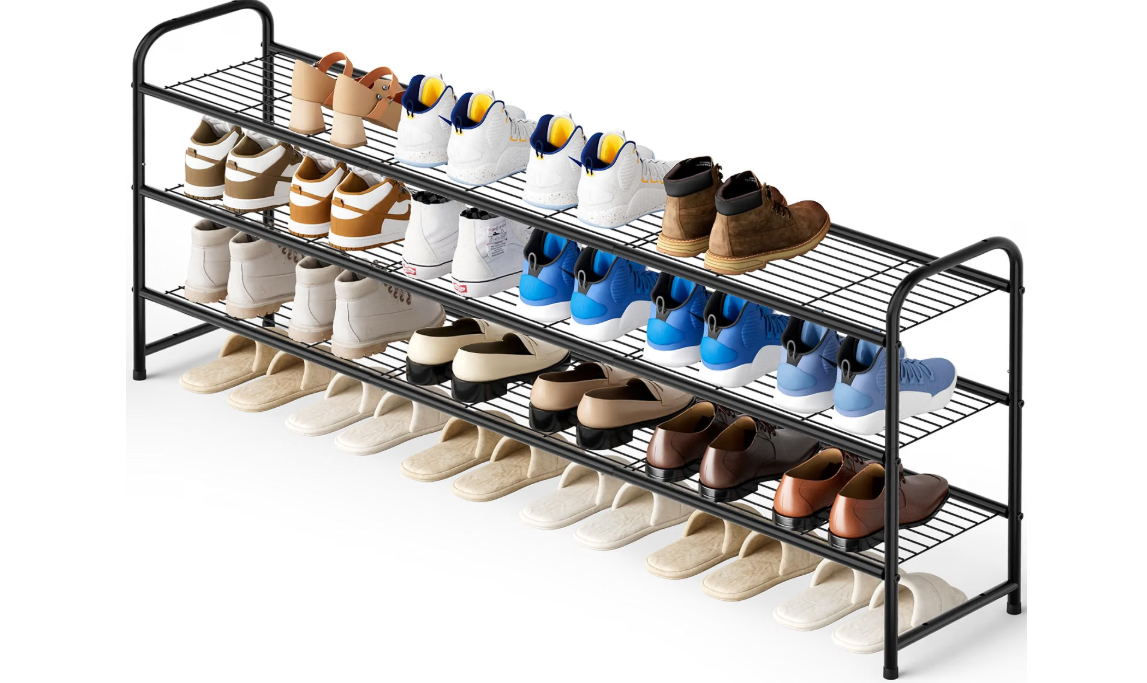
KEETDY 3-Tier Shoe Rack provides a practical storage solution for organizing footwear in entryways, closets, bedrooms, garages, and mudrooms. Its wide three-tier design offers space for up to 24 pairs of shoes, making it suitable for families and larger collections. The heavy-duty metal frame provides sturdy support, while the open wire-grid shelves allow easy access and airflow around footwear. Its stackable design also lets you combine two units for additional vertical storage when more capacity is needed. The rack can accommodate various footwear styles, including sneakers, boots, slippers, and heels.
We recommend the KEETDY shoe rack for households needing generous, space-efficient footwear storage.
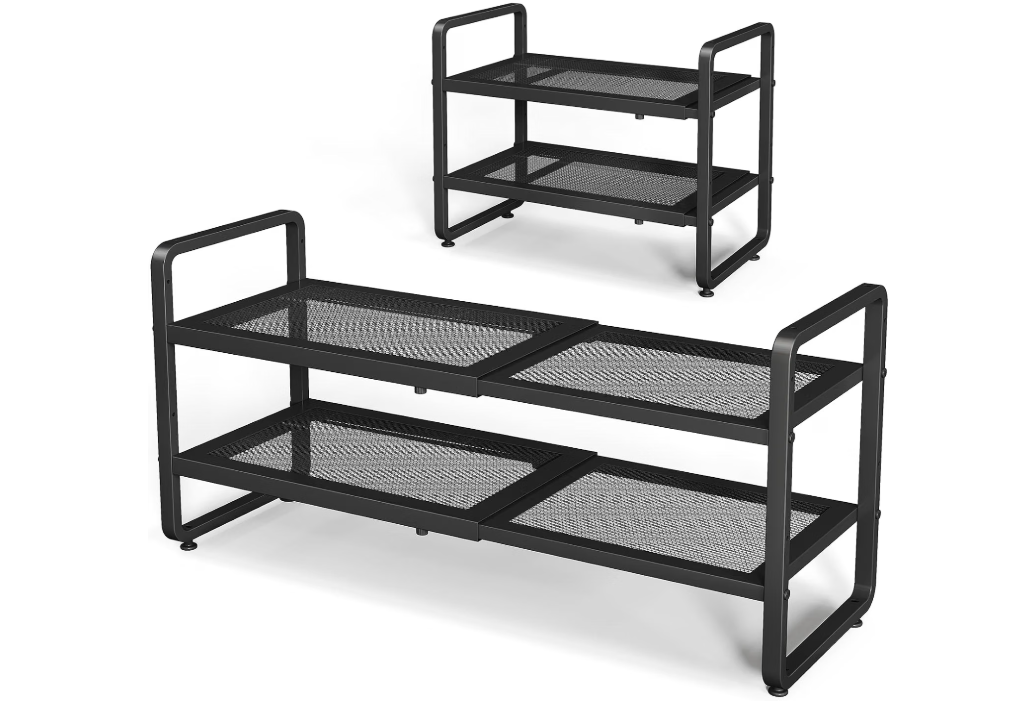
SNTD Expandable 2-Tier Shoe Rack offers a flexible storage solution for organizing footwear in closets, entryways, garages, apartments, and other compact spaces. Its adjustable width lets you customize the rack to fit different areas, while the two-tier mesh shelves provide convenient access to shoes, sneakers, boots, and heels. The heavy-duty metal construction offers sturdy support, and adjustable feet can help improve stability on uneven floors. Its stackable design also allows additional tiers when more storage is needed. The open mesh structure keeps footwear visible and accessible while making cleaning simple.
We recommend the SNTD shoe rack for users who want adjustable, expandable, and space-efficient footwear organization.
HDDTTZ 3-Tier Expandable Shoe Rack provides a flexible storage solution for organizing shoes, sneakers, boots, sandals, and heels in closets, entryways, bedrooms, and other compact areas. Its adjustable 17- to 31-inch width allows you to customize the rack according to available space, while three tiers provide room for 12 or more pairs of footwear. The heavy-duty iron construction offers sturdy support, and non-slip rubber end caps help improve stability while protecting floors. Its stackable design can also increase storage capacity when needed. The step-style shelves keep footwear visible and accessible for everyday use.
We recommend the HDDTTZ shoe rack for users seeking adjustable, expandable, and practical footwear storage.
ROMGUAR CRAFT 3-Tier Bamboo Shoe Rack combines practical footwear storage with a natural look that can complement entryways, bedrooms, closets, and dorm rooms. Its three open tiers provide space for up to nine pairs of shoes, while the carbonized bamboo construction offers a sturdy and attractive alternative to metal racks. The compact 27 × 11-inch footprint helps conserve floor space, and the stackable design allows you to combine two units for additional storage. Its open shelves keep footwear visible and accessible, while the lightweight construction makes positioning simple.
We recommend the ROMGUAR CRAFT shoe rack for users seeking natural styling and space-saving footwear organization.
Simple Houseware 3-Tier Shoe Rack offers a practical way to keep everyday footwear organized in entryways, closets, garages, mudrooms, and bedrooms. Its three wired-grid shelves can hold up to nine pairs of shoes, while the sturdy metal construction provides reliable support for regular use. The wood top adds useful space for storing small accessories, keys, or other items you want close at hand. Its stackable design also allows additional storage by combining units when needed. The compact footprint makes it suitable for areas where floor space is limited.
We recommend the Simple Houseware shoe rack for users seeking affordable, functional, and versatile footwear organization for everyday home use.
viewcare 3-Tier Bamboo Shoe Rack offers a simple and attractive way to organize footwear in entryways, closets, bedrooms, hallways, and other compact spaces. Its three-tier design provides room for up to nine pairs of adult shoes, while the solid bamboo construction gives the rack a natural appearance and lightweight feel. The open shelving keeps footwear easily visible and accessible, and the freestanding design makes placement straightforward. Its stackable construction also allows two units to be combined for additional vertical storage. The compact footprint makes it suitable for smaller homes and apartments.
We recommend the viewcare shoe rack for users seeking lightweight, natural-looking, and space-saving footwear organization.
Shoe Racks Buying Guide
Choosing the right shoe rack can help keep footwear organized while making better use of entryways, closets, bedrooms, garages, and other areas around the home. With different sizes, materials, layouts, and storage capacities available, it is important to consider your footwear collection and the space available. The right shoe rack should provide enough storage while remaining stable, accessible, and easy to maintain.
Size and Dimensions
Measure the area where you plan to place the shoe rack before buying. Consider its width, depth, and height to make sure it fits comfortably without blocking doors or walkways. Compact racks are useful for apartments and small entryways, while wider or taller models can provide more storage for larger households.
Storage Capacity
Consider how many pairs of shoes you need to store. Small racks may hold a few pairs, while larger multi-tier models can accommodate several dozen pairs. Check the manufacturer’s stated capacity and consider the types of footwear you own, including sneakers, sandals, heels, and boots.
Number of Tiers
The number of shelves affects how much footwear the rack can hold. Two- or three-tier racks are suitable for smaller collections, while four-tier or taller designs can provide additional storage without requiring a larger footprint. Vertical storage can be especially useful when floor space is limited.
Material
Common shoe rack materials include metal, bamboo, wood, engineered wood, and plastic. Metal racks can offer sturdy support and durability, while bamboo and wood provide a warmer appearance. Plastic models are often lightweight and easy to clean. Choose a material that suits your storage needs, room décor, and expected level of use.
Weight Capacity
Check the maximum weight capacity of the rack and individual shelves. This is particularly important if you plan to store heavy boots or several pairs of footwear on each level. A rack with a strong frame and reinforced shelves can provide better support for heavier collections.
Shelf Spacing
Shelf spacing determines which types of footwear can fit comfortably. Standard shoes and sneakers generally require less vertical space, while boots and high-top footwear need taller shelves. Look for adjustable or appropriately spaced shelves when your collection includes footwear of different heights.
Stability
A stable shoe rack is important for everyday use. Look for strong frames, wide bases, reinforced joints, and non-slip feet. Adjustable feet can be particularly useful on uneven floors. Taller racks should also be positioned securely to reduce the risk of tipping.
Open or Closed Design
Open shoe racks make footwear easy to see and access while allowing airflow around shoes. Closed designs with doors or cabinets provide a cleaner appearance and better protection from dust. Choose the style based on whether accessibility or concealed storage is more important to you.
Expandable and Stackable Design
Expandable shoe racks can adjust to fit different spaces, while stackable models allow you to add additional levels as your footwear collection grows. These designs can provide greater flexibility, particularly for renters, families, and users who may need more storage later.
Shoe and Boot Compatibility
Consider whether the rack can accommodate the footwear you use most often. Some models work well for standard shoes and sneakers but have limited room for tall boots or high heels. Look for wider shelves, taller compartments, or dedicated boot storage when necessary.
Assembly
Check how much assembly is required before purchasing. Some shoe racks require tools and multiple steps, while others can be assembled quickly with included hardware or tool-free connections. Clear instructions and sturdy joints can make installation easier and help improve overall stability.
Portability
A lightweight shoe rack can be useful when you frequently rearrange furniture or move between homes. Handles, compact dimensions, or lightweight materials can make a rack easier to reposition. Heavier metal or wooden racks may be more stable but less convenient to move.
Ease of Cleaning
Shoe racks can collect dust, dirt, and debris from footwear, so easy maintenance is important. Wire or mesh shelves can allow dirt to fall through and are often simple to wipe or clean. Wood and bamboo surfaces may require more careful cleaning, especially in areas exposed to moisture.
Placement
Think about where the rack will be used. Entryway racks should be easy to access when entering or leaving the house, while closet racks can maximize storage in a dedicated area. Garage and mudroom racks may benefit from durable materials that can handle dirt, moisture, and frequent use.
Design and Appearance
The shoe rack will often remain visible, particularly in entryways and bedrooms, so its appearance can be an important consideration. Metal racks can provide a modern look, while bamboo and wooden designs can complement traditional or natural décor. Choose a style that fits your existing furniture and surroundings.
Moisture Resistance
If you plan to store shoes in a garage, mudroom, basement, or other area where moisture may be present, consider the rack’s resistance to humidity and water exposure. Metal, plastic, and properly treated materials may be easier to maintain in these environments than untreated wood.
Floor Protection
Look for racks with rubberized, padded, or non-slip feet when protecting flooring is important. These features can help reduce scratching and prevent the rack from sliding during everyday use. They can be especially useful on smooth surfaces such as tile, hardwood, or laminate.
Multifunctional Features
Some shoe racks provide additional functionality beyond footwear storage. Certain designs include a wooden top shelf, bench seating, drawers, hooks, or storage compartments for keys, bags, accessories, and other household items. These features can help make the rack more useful in an entryway.
Space-Saving Design
Vertical racks, narrow shelving units, expandable models, and stackable designs can help maximize storage in limited spaces. Measure the available area carefully and consider using vertical space when you need to store many pairs without taking up additional floor area.
Price and Overall Value
Consider the purchase price alongside capacity, materials, durability, stability, and useful features. A basic rack may be enough for a small footwear collection, while a larger investment may make sense for households with many pairs or demanding storage requirements. Compare the overall construction and functionality rather than focusing only on price.
Bottom Line
The right shoe rack should provide enough capacity for your footwear while fitting comfortably into your available space. Pay attention to dimensions, number of tiers, material, weight capacity, shelf spacing, stability, and compatibility with different types of shoes. Features such as stackable construction, adjustable shelves, enclosed storage, easy cleaning, and multifunctional designs can provide additional convenience. By comparing these factors carefully, you can choose a shoe rack that keeps footwear organized, accessible, and neatly stored throughout your home.
Frequently Asked Questions
A shoe rack is a storage unit designed to organize footwear such as shoes, sneakers, boots, sandals, slippers, and heels. It can help keep footwear off the floor and reduce clutter in entryways, closets, bedrooms, and other areas.
The right size depends on your available space and the number of pairs you need to store. Measure the intended area and choose a rack that provides enough capacity without blocking doors, walkways, or other furniture.
Metal, bamboo, wood, engineered wood, and plastic are common choices. Metal can provide strong support, bamboo and wood offer a natural appearance, and plastic is lightweight and easy to clean. The best option depends on your space and preferences.
Narrow, vertical, stackable, and expandable shoe racks can be useful for small spaces. These designs can increase storage capacity without requiring a large floor footprint.
Stackable shoe racks can be useful when you expect your footwear collection to grow. They allow you to add additional storage vertically, but make sure the units are designed to stack securely and remain stable.
Conclusion
Shoe racks are a simple and practical way to keep footwear organized while making better use of available space. The right option depends on the size of your collection, the types of footwear you own, and where you plan to place the rack. Compact models can work well in apartments and small entryways, while larger multi-tier or expandable designs can provide more storage for families and bigger collections.
When choosing a shoe rack, consider its dimensions, storage capacity, material, shelf spacing, weight capacity, stability, and assembly requirements. Features such as stackable construction, adjustable shelves, non-slip feet, and multifunctional storage can add extra convenience. By comparing these factors carefully, you can choose a shoe rack that keeps your footwear accessible, organized, and neatly stored throughout your home.