
Introduction
Extension cords are practical electrical accessories that provide extra reach when a power outlet is not located close enough to a device or appliance. They can be useful in homes, offices, workshops, garages, outdoor spaces, and other areas where additional flexibility is needed. Different extension cords are designed for different applications, ranging from lightweight indoor models for lamps and small electronics to heavy-duty cords for power tools and larger equipment.
The best extension cords come in various lengths, wire gauges, plug styles, outlet configurations, and safety designs. Some include multiple outlets, built-in circuit protection, lighted plugs, weather-resistant construction, or heavy-duty insulation for demanding environments.
When choosing an extension cord, consider the required length, wire gauge, maximum amperage, number of outlets, indoor or outdoor use, plug type, safety features, and overall durability. In this guide, we’ll explore some of the best extension cords and their key features to help you choose a suitable option for your power needs.
How We Choose Products
- We evaluate products using relevant specifications, features, design, materials, functionality, ease of use, intended use and overall value.
- Our recommendations are based on information available from manufacturers, retailers and other publicly available sources, along with our own editorial analysis.
- We aim to present product information accurately and distinguish manufacturer or retailer claims from our independent assessment.
- We do not claim to have personally tested a product unless we have hands-on experience with it. When we have not personally tested a product, our evaluation is based on available product information and careful editorial research.
Top Extension Cords
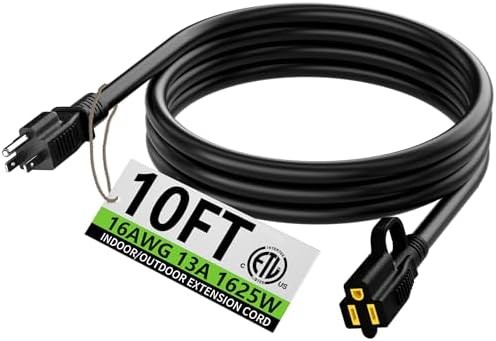


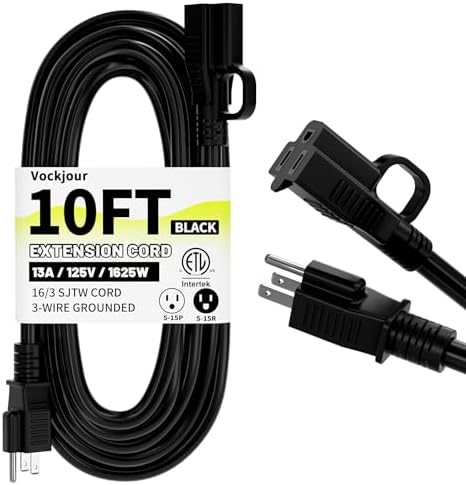
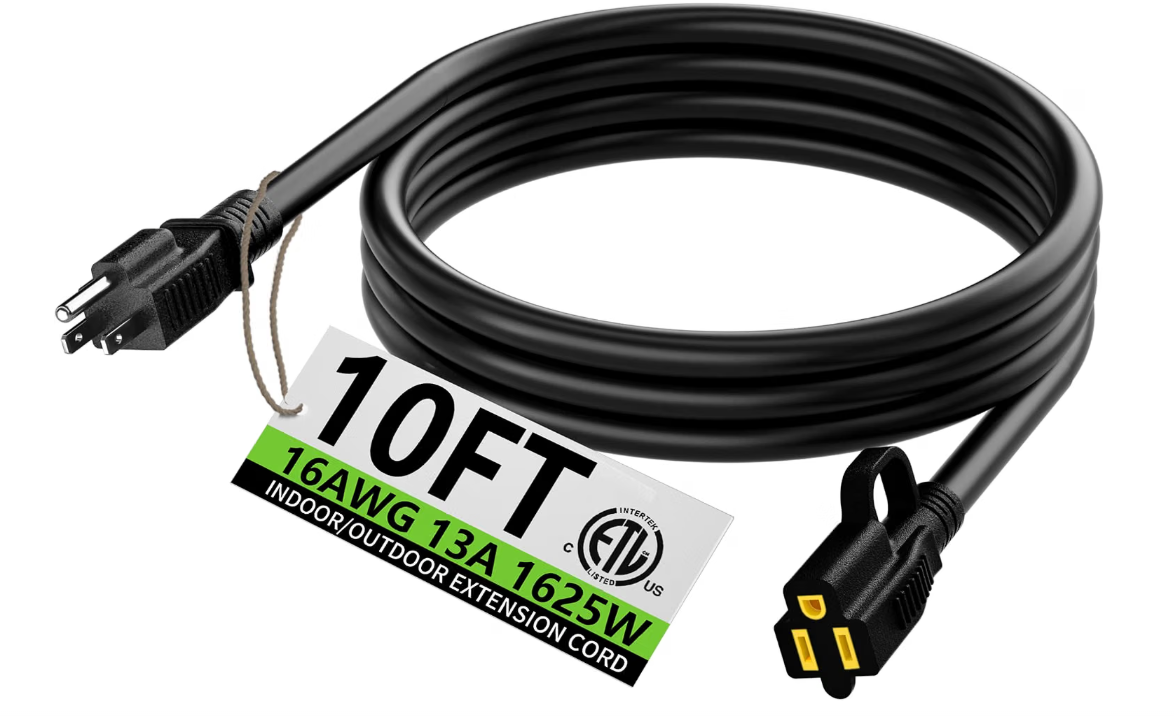
The HUANCHAIN 10-Foot Extension Cord is a compact and versatile power solution designed for indoor and outdoor applications. Its 16/3 AWG SJTW construction supports up to 13 amps and 1625 watts, making it suitable for many appliances, power tools, lawn equipment, and household devices. The 10-foot length provides useful extra reach without the bulk of longer cords, while the flexible vinyl jacket makes handling easier. Its waterproof, cold-resistant, abrasion-resistant, and flame-resistant construction adds durability for demanding environments.
We recommend this extension cord for homeowners and DIY users who need a dependable, medium-length power cable for indoor or outdoor equipment.
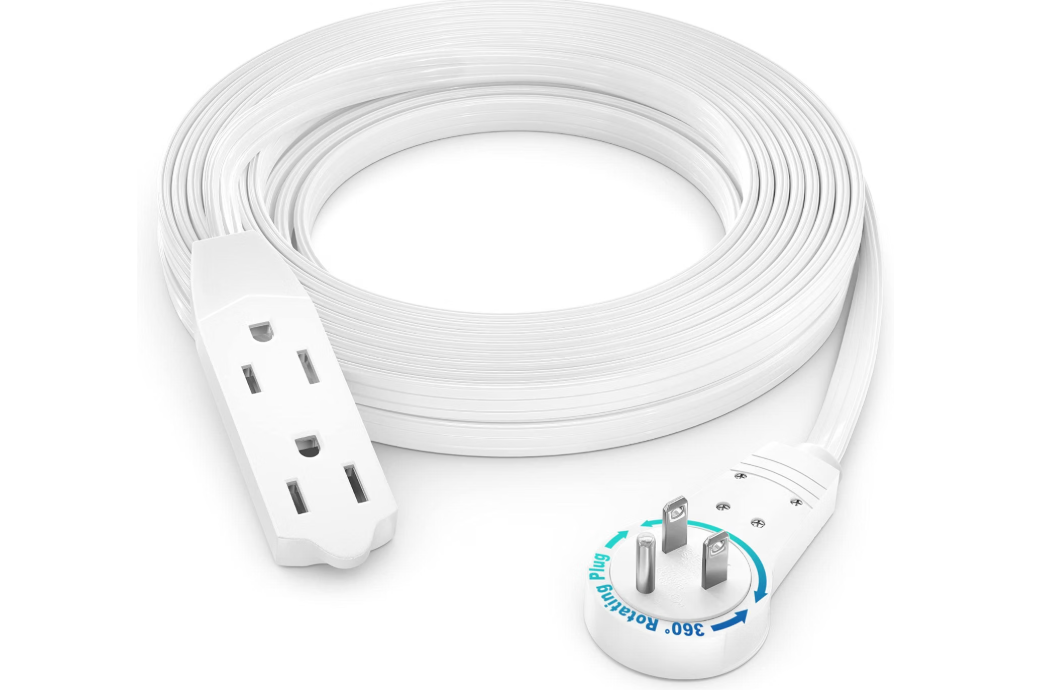
The Maximm 15-Foot 360° Rotating Extension Cord is a practical choice for adding power to areas where outlets are difficult to access. Its 16 AWG, three-conductor design supports up to 13 amps and 1625 watts, while three grounded outlets allow multiple compatible devices to be connected. The 360° rotating flat plug is especially useful behind furniture, desks, bookshelves, and other tight spaces because it can help reduce bending and obstruction. Its 15-foot length provides useful reach for everyday indoor applications, and the flexible PVC construction makes handling easier.
We recommend this extension cord for home and office users who need multiple outlets and a space-saving plug design.
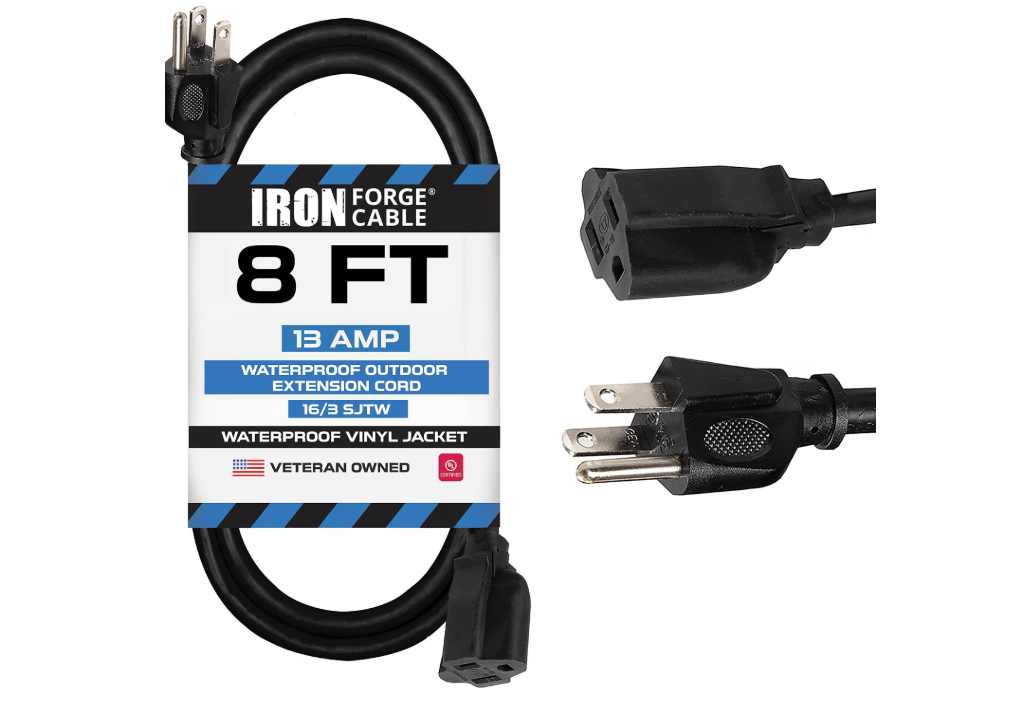
The IRON FORGE CABLE 8-Foot Extension Cord is a durable power solution designed for indoor and outdoor use. Its 16/3 AWG SJTW construction supports up to 13 amps and 1625 watts, making it suitable for lights, small appliances, landscaping equipment, monitors, and other compatible devices. The weatherproof and flame-retardant jacket is designed to withstand demanding conditions, while nickel-coated blades help provide reliable connections. Its 8-foot length offers convenient extra reach without the bulk of longer cords, and the flexible construction makes it easier to handle and store.
We recommend this extension cord for homeowners and DIY users who need a compact, durable, and versatile power cable.
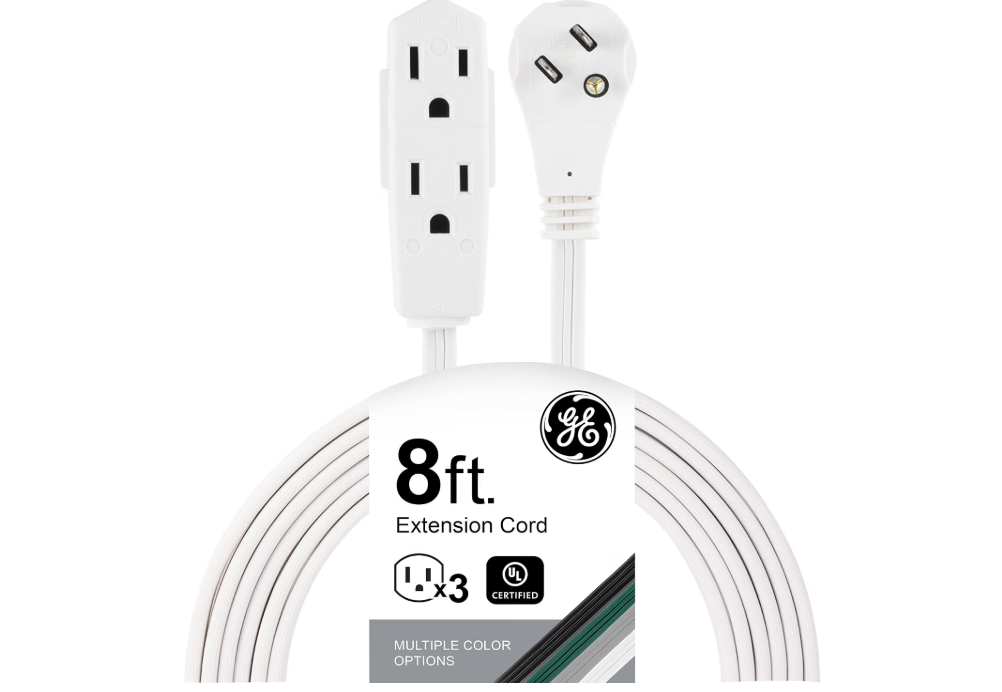
The GE 50251 8-Foot Extension Cord is a practical power solution for home offices, entertainment centers, desks, and other indoor areas. Its 16/3 AWG construction supports up to 13 amps and 1625 watts, while three grounded outlets allow multiple compatible devices to share one power source. The right-angle flat plug is designed to fit neatly behind furniture and in tight spaces, helping reduce obstruction. Its 8-foot length provides useful additional reach without becoming difficult to manage, and the PVC jacket offers everyday durability.
We recommend this extension cord for indoor users who need multiple grounded outlets, convenient reach, and a space-saving plug design.
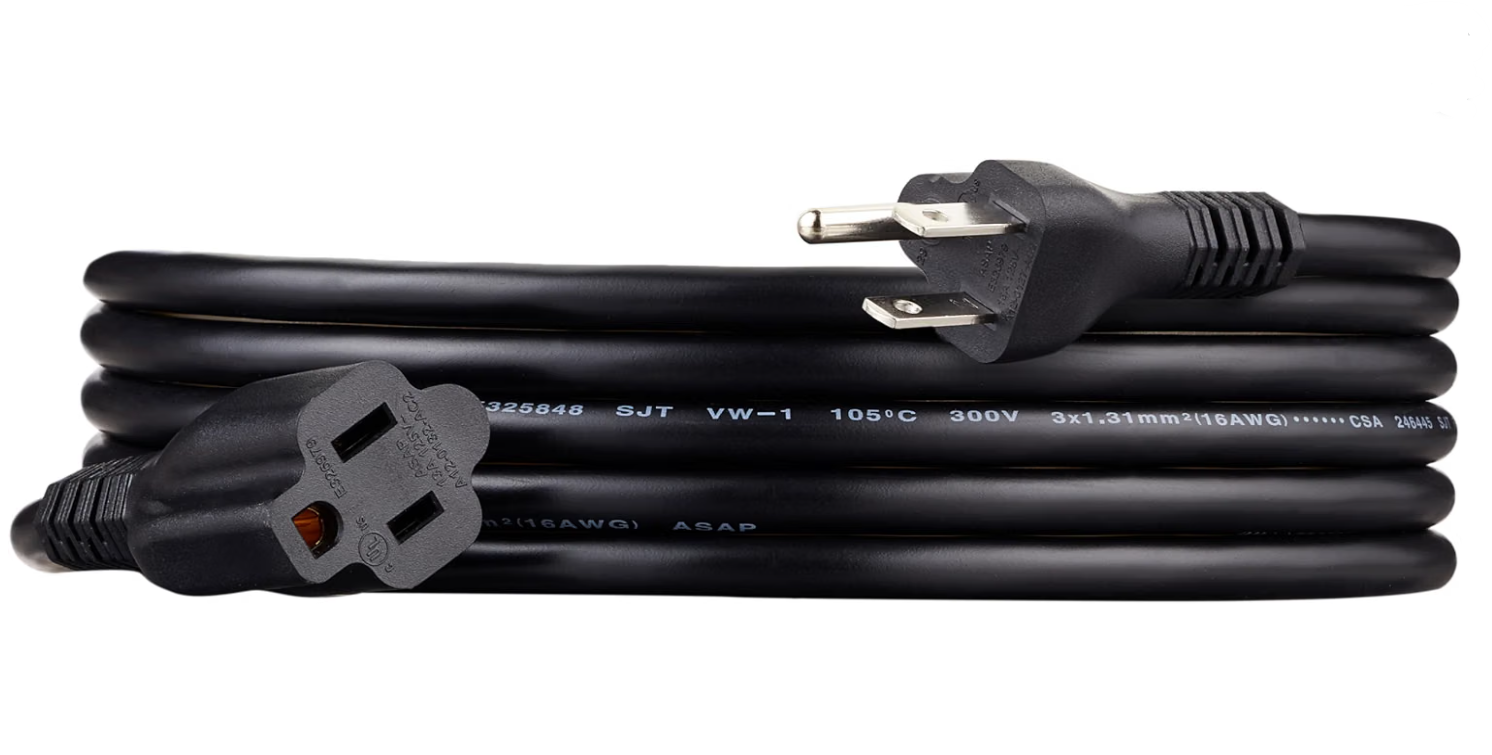
The Amazon Basics 10-Foot Extension Cord is a straightforward power solution for extending the reach of compatible indoor electronics, tools, media equipment, and household devices. Its 16 AWG construction supports up to 13 amps and 1625 watts, providing useful capacity for many everyday applications. The 10-foot length offers convenient extra reach while remaining relatively easy to manage and store. Its three-prong grounded design helps provide a secure connection, and the durable PVC construction is suited to routine indoor use.
We recommend this extension cord for homeowners who need an affordable, dependable, and simple way to extend power to devices positioned away from wall outlets.
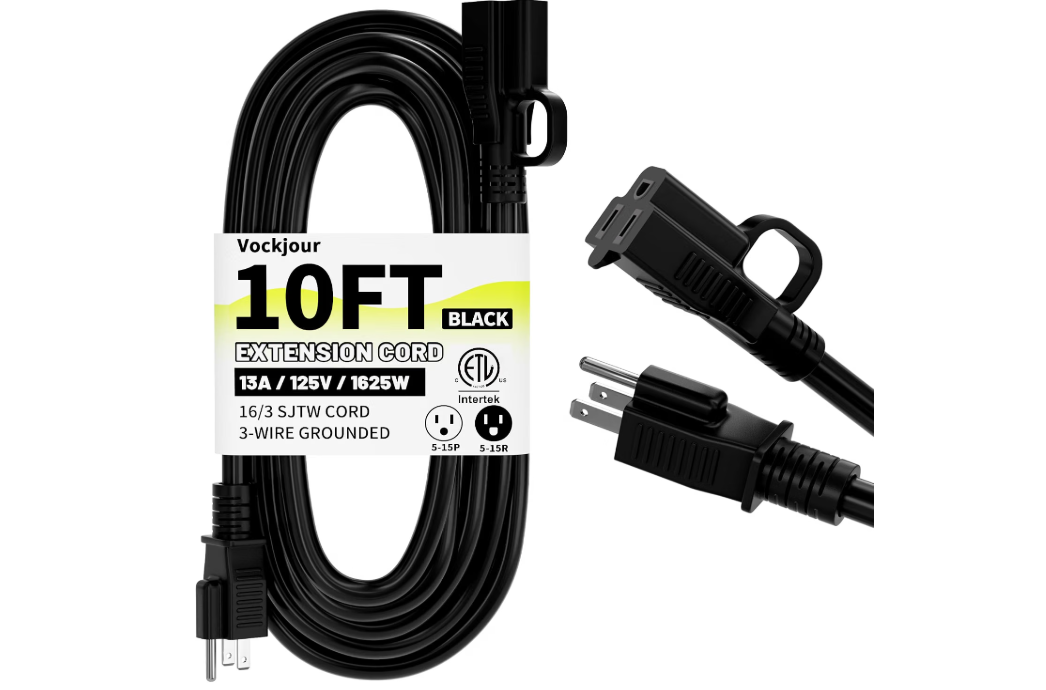
The Vockjour 10-Foot Extension Cord is a versatile power solution designed for both indoor and outdoor use. Its 16/3 AWG SJTW construction supports up to 13 amps and 1625 watts, making it suitable for compatible appliances, power tools, lawn equipment, and other household devices. The 10-foot length provides convenient reach without the bulk of longer cords, while the flexible jacket makes handling and storage easier. Its waterproof, weather-resistant, flame-retardant, and temperature-resistant construction is designed for demanding environments.
We recommend this extension cord for homeowners and DIY users who need a durable, flexible, and weather-resistant option for everyday indoor and outdoor power needs.
Extension Cords Buying Guide
Choosing the right extension cord is important for getting reliable power while using electrical devices safely and conveniently. Extension cords differ in length, wire gauge, amperage capacity, outlet configuration, insulation, and intended environment. A lightweight indoor cord may be suitable for lamps and electronics, while outdoor equipment or power tools may require a heavier-duty model. Before purchasing, consider the device you plan to connect and the conditions in which the cord will be used.
1. Cord Length
Choose a length that provides enough reach without creating unnecessary excess cable. Common lengths range from a few feet to 50 feet or more. Avoid using a much longer cord than necessary because extra cable can be difficult to manage.
2. Wire Gauge
Wire gauge indicates the thickness of the conductors. Lower AWG numbers generally indicate thicker wire and greater capacity. Common extension cords include 16, 14, and 12 AWG, with heavier-gauge cords generally better suited to higher electrical loads.
3. Amperage Rating
Check the cord’s maximum amperage rating before connecting a device. The cord should be rated to handle the current required by the equipment without exceeding its capacity.
4. Wattage Capacity
Extension cords also list a maximum wattage, such as 1250W or 1625W. Compare this rating with the power requirements of the device or equipment you intend to operate.
5. Voltage Rating
Most household extension cords are designed for standard electrical systems, commonly around 125 volts in the United States. Make sure the cord’s voltage rating is appropriate for the equipment and electrical system being used.
6. Indoor vs. Outdoor Use
Indoor and outdoor extension cords are designed for different environments. Outdoor cords generally have tougher insulation and greater resistance to moisture, temperature changes, and abrasion. Use a cord specifically rated for the environment where it will operate.
7. Cord Type
Extension cords are available in different jacket types, including light-duty, medium-duty, and heavy-duty designs. Choose a cord type based on the equipment’s power requirements and the expected conditions of use.
8. Number of Outlets
Some extension cords provide a single outlet, while others have multiple grounded outlets. A multi-outlet cord can be useful when several compatible devices need power, but the total connected load must remain within the cord’s rating.
9. Plug Design
Consider the plug shape and size, especially when the outlet is located behind furniture or in a restricted space. Flat and right-angle plugs can make positioning easier and reduce the amount of space needed around the outlet.
10. Grounded vs. Ungrounded
Three-prong grounded extension cords include a grounding connection and are commonly used with equipment that requires grounding. Two-prong cords are generally intended for compatible double-insulated or low-power devices. Always match the cord to the device’s plug requirements.
11. Jacket Material
The outer jacket protects the internal wires from wear and environmental exposure. PVC and vinyl are common materials, while heavy-duty outdoor cords may use jackets designed for greater resistance to moisture, abrasion, heat, or cold.
12. Flexibility
A flexible extension cord is easier to route around furniture, equipment, and work areas. However, flexibility should not come at the expense of the cord’s appropriate power rating or durability.
13. Weather Resistance
For outdoor applications, consider weather-resistant construction. Features such as water-resistant jackets, cold resistance, and UV resistance can help a cord perform more reliably in outdoor environments. Follow the manufacturer’s instructions regarding exposure to moisture.
14. Safety Features
Look for appropriate electrical certifications and useful safety features such as grounded construction, reinforced connections, strain relief, and durable insulation. These features can improve durability and help reduce risks associated with damaged or poorly constructed cords.
15. Connector and Strain Relief
Reinforced connectors and strain-relief sections help protect the cord where the cable meets the plug or socket. A strong connection can improve durability when the cord is frequently moved or handled.
16. Heavy-Duty Construction
If you plan to use an extension cord with power tools, lawn equipment, workshop equipment, or other demanding devices, consider a heavier-duty cord with an appropriate gauge and rating. Do not use a light-duty cord for equipment that requires a higher electrical capacity.
17. Storage and Tangle Resistance
Consider how easily the cord can be coiled and stored. Flexible jackets, integrated hooks, and tangle-resistant designs can make storage more convenient and help keep work areas organized.
18. Compatibility
Make sure the extension cord has the correct plug and outlet configuration for your equipment. Check whether the device uses two or three prongs and verify that the cord supports the required voltage, amperage, and wattage.
19. Certification and Standards
Look for recognized safety certifications such as UL or ETL Listed when applicable. Certification can provide an indication that the product has been evaluated against relevant electrical safety requirements.
20. Price and Overall Value
Compare the price with the cord’s length, gauge, capacity, durability, safety features, and intended use. A more expensive cord may offer better construction or higher capacity, while a basic model may provide better value for simple, low-power applications.
Bottom Line
The right extension cord should match the electrical requirements of your equipment and the environment where you plan to use it. Pay close attention to cord length, wire gauge, amperage, wattage, voltage, grounding, outlet configuration, and indoor or outdoor ratings. For demanding applications, choose a properly rated heavy-duty cord rather than relying on a lightweight model. Avoid exceeding the cord’s rated capacity, inspect it regularly for damage, and follow the manufacturer’s safety instructions. By comparing these factors carefully, you can choose an extension cord that provides the reach, flexibility, and durability needed for your home, office, workshop, or outdoor projects.
Frequently Asked Questions
An extension cord is a flexible electrical cable that allows you to connect a device to a power outlet located farther away. Extension cords are available in different lengths, gauges, outlet configurations, and power ratings.
The appropriate gauge depends on the electrical load and cord length. Lower AWG numbers generally indicate thicker conductors that can handle greater loads. Check the equipment requirements and the extension cord’s rated capacity before use.
The main difference is conductor thickness and electrical capacity. A lower gauge number generally means thicker wire and greater capacity, making heavier-gauge cords more suitable for demanding equipment.
Extension cords are available in many lengths, from a few feet to 100 feet or more. Use the shortest length that provides the required reach, and follow the manufacturer’s guidance for maximum loads and cord length.
Indoor extension cords should generally not be used outdoors because they may lack the insulation and environmental protection needed for outdoor conditions. Use a cord specifically rated for outdoor applications.
Conclusion
Extension cords are useful for extending power to appliances, tools, electronics, and other devices when a wall outlet is out of reach. With options available for indoor, outdoor, light-duty, and heavy-duty applications, choosing the right cord depends on your specific power and usage requirements.
When selecting an extension cord, consider important factors such as length, wire gauge, amperage, wattage, voltage, grounding, outlet configuration, jacket material, flexibility, and weather resistance. Safety certifications and durable construction can also provide additional confidence for everyday use.
Ultimately, the right extension cord should provide sufficient reach and electrical capacity without exceeding its rated limits. By comparing specifications and choosing a cord designed for your intended application, you can find a practical and dependable solution for home, office, workshop, or outdoor power needs.