
Introduction
Smart thermostats are modern home devices designed to make heating and cooling more convenient, efficient, and easier to control. Unlike traditional thermostats, smart models can connect to Wi-Fi and allow you to adjust your home’s temperature using a smartphone app, voice assistant, or automated schedule. Many also offer useful features such as learning routines, remote access, geofencing, energy reports, and compatibility with other smart-home devices.
When choosing a smart thermostat, consider factors such as HVAC compatibility, wiring requirements, Wi-Fi connectivity, display quality, scheduling options, smart-home support, and installation requirements. Some models can work without a C-wire, while others may require professional installation depending on your heating and cooling system.
In this guide, we’ll explore some of the best smart thermostats for different homes, HVAC systems, and budgets. Whether you want convenient remote temperature control, smarter scheduling, or better insight into energy usage, the right smart thermostat can provide greater comfort and make everyday home climate management easier.
How We Choose Products
- We evaluate products using relevant specifications, features, design, materials, functionality, ease of use, intended use and overall value.
- Our recommendations are based on information available from manufacturers, retailers and other publicly available sources, along with our own editorial analysis.
- We aim to present product information accurately and distinguish manufacturer or retailer claims from our independent assessment.
- We do not claim to have personally tested a product unless we have hands-on experience with it. When we have not personally tested a product, our evaluation is based on available product information and careful editorial research.
Top Smart Thermostats



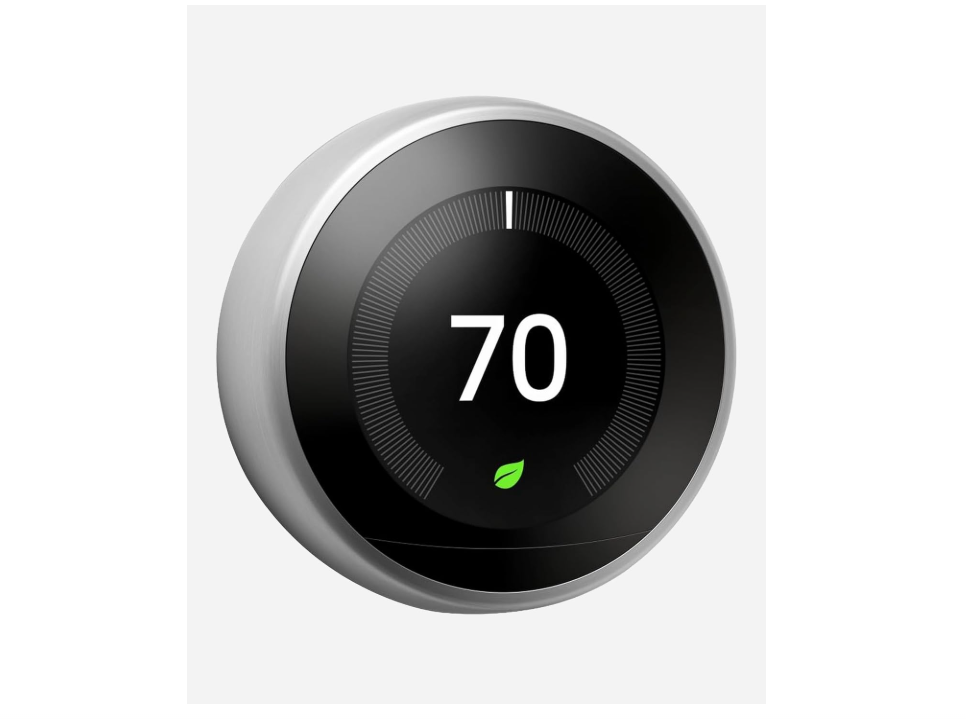
The Google Nest Learning Thermostat (3rd Generation) is a smart and convenient way to manage home heating and cooling. It learns your preferred temperatures and routine, then automatically creates a schedule to help reduce unnecessary energy use. The high-resolution display with Farsight shows useful information when you approach, while the Nest app allows remote temperature control from your phone. It supports voice control through Amazon Alexa and Google Assistant and works with up to 95% of HVAC systems.
We recommend this thermostat for homeowners seeking intelligent temperature control, convenient scheduling, remote access, and energy-saving features for everyday home comfort.
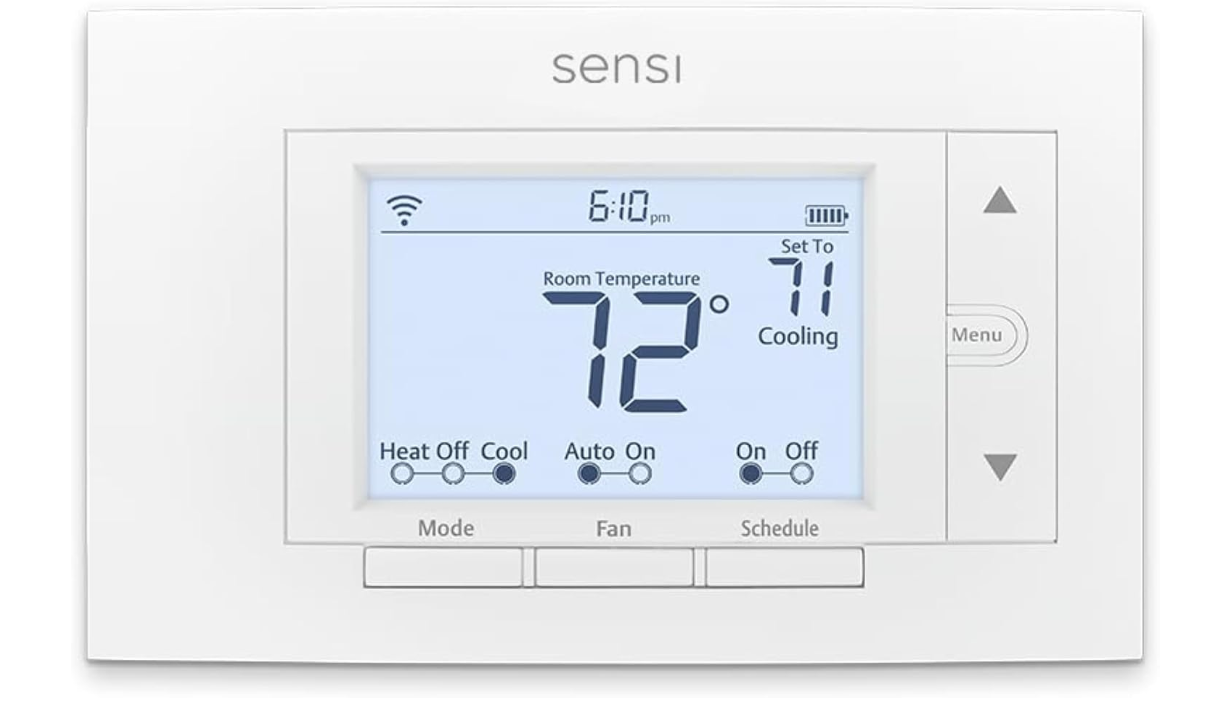
The Emerson Sensi Wi-Fi Smart Thermostat is a practical choice for improving comfort and temperature control at home. Its Wi-Fi connectivity allows you to adjust heating and cooling remotely through the Sensi mobile app, while flexible scheduling helps automate daily temperature settings. The thermostat works with most conventional HVAC systems and does not require a C-wire for most installations. Smart alerts can notify you about heating or cooling issues, while geofencing can automatically adjust temperatures based on your location.
We recommend this smart thermostat for homeowners seeking convenient remote control, flexible scheduling, smart alerts, and potential energy savings without a complicated setup.
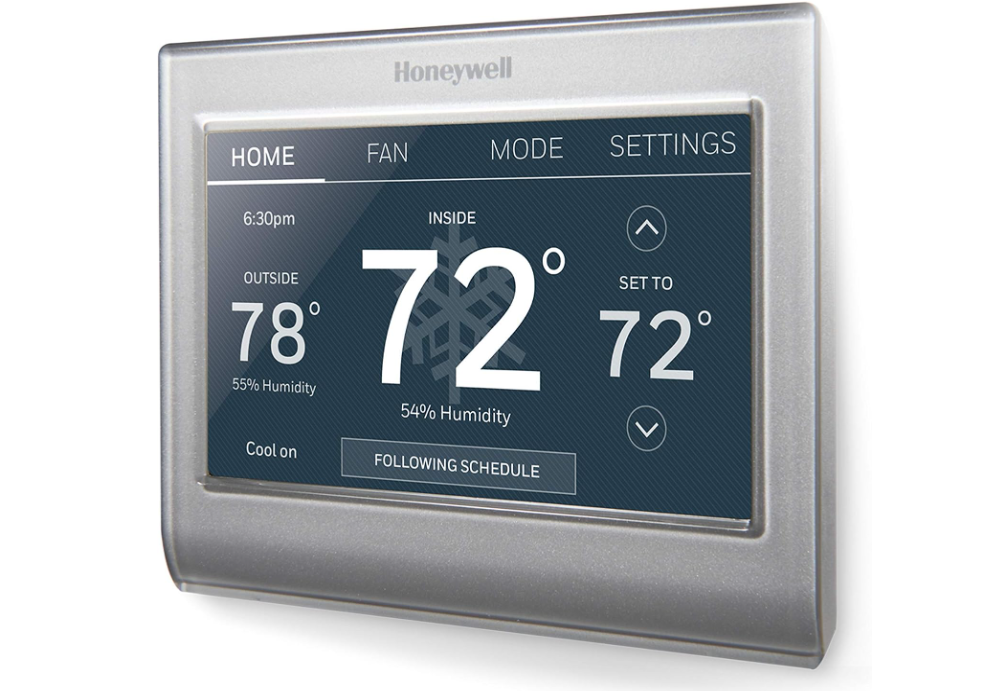
The Honeywell RTH9585WF1004 WiFi Smart Color Thermostat is a convenient upgrade for managing heating and cooling at home. Its customizable full-color touchscreen provides clear controls and displays indoor temperature, humidity, time, and outdoor conditions. WiFi connectivity allows remote temperature control through the Total Connect Comfort app, while 7-day programming lets you create customized schedules for each day. Smart Response technology adapts to preferred heating and cooling cycles, and ENERGY STAR certification supports energy-conscious operation.
We recommend this thermostat for homeowners seeking stylish touchscreen controls, flexible scheduling, remote access, and smart temperature management for everyday home comfort.
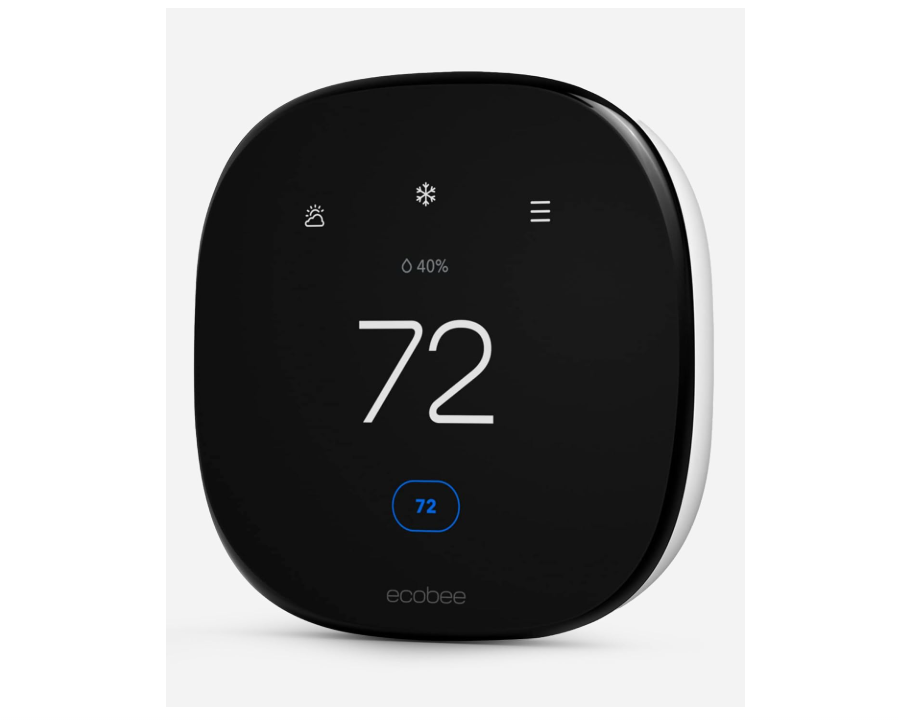
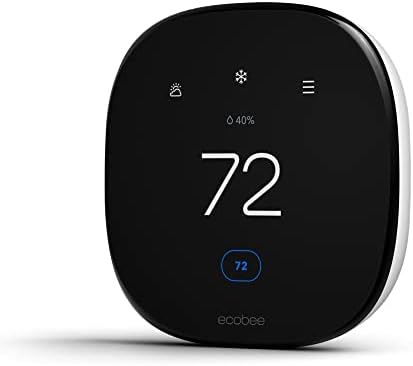
The ecobee Smart Thermostat Enhanced is a convenient way to improve temperature control and comfort at home. Its color touchscreen provides easy access to heating and cooling settings, while built-in occupancy sensing can help adjust comfort based on whether someone is home. Wi-Fi connectivity allows remote control through the ecobee app, and compatibility with Amazon Alexa, Siri, and Google Assistant adds convenient voice control. The thermostat can also work with optional SmartSensors to help balance temperatures between different rooms.
We recommend the ecobee Smart Thermostat Enhanced for homeowners seeking smart scheduling, remote control, energy-conscious operation, and convenient home temperature management.
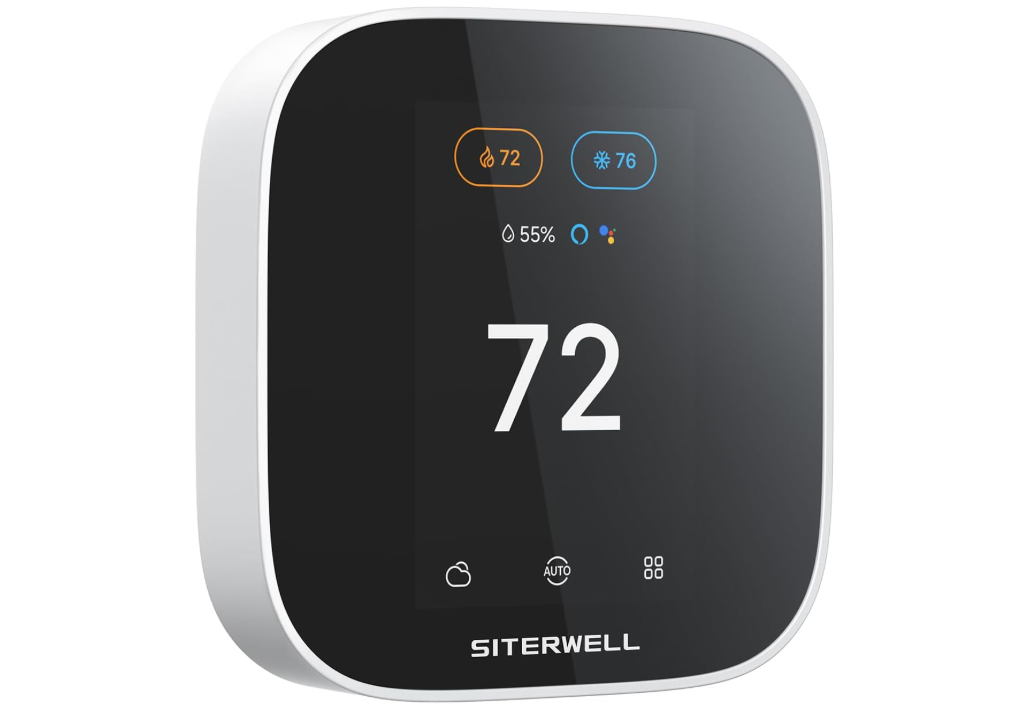
The SITERWELL Smart Thermostat is a convenient option for managing home heating and cooling with smart controls. Its touchscreen interface provides easy access to temperature settings, while Wi-Fi connectivity allows remote control through the Siterwell app. Programmable schedules help automate comfort throughout the day, and compatibility with Amazon Alexa and Google Assistant provides convenient voice control. The thermostat is designed for HVAC systems that require a C-wire, so compatibility should be checked before installation.
We recommend this thermostat for homeowners seeking convenient app control, programmable scheduling, voice commands, and a modern touchscreen for everyday home temperature management.
Smart Thermostats Buying Guide
Smart thermostats can make home heating and cooling more convenient by allowing you to adjust temperatures, create schedules, and control your HVAC system remotely. With many models offering different features, it’s important to choose one that matches your home’s HVAC setup and your smart-home needs.
1. Check HVAC Compatibility
Before buying, confirm that the thermostat works with your heating and cooling system. Check support for central air, furnaces, heat pumps, boilers, and multi-stage systems.
2. Check the C-Wire Requirement
Some smart thermostats require a common wire (C-wire) for continuous power, while others can operate without one or include an adapter. Check your existing thermostat wiring before purchasing.
3. Consider Wi-Fi Connectivity
Wi-Fi allows remote control through a smartphone app and enables many smart features. Most models use 2.4GHz Wi-Fi, while some newer options support dual-band connectivity.
4. Check Smart-Home Compatibility
Look for compatibility with Amazon Alexa, Google Home, Apple Home, or Matter if you want to connect the thermostat with other smart devices.
5. Look for App Control
A reliable app should allow you to adjust temperature, create schedules, monitor HVAC activity, and control the thermostat while you’re away from home.
6. Consider Scheduling Features
Programmable schedules let you set different temperatures throughout the day and week. Some advanced thermostats can learn your habits and automatically optimize schedules.
7. Consider Geofencing
Geofencing can adjust the temperature based on whether you are home or away by using your smartphone’s location. This can help automate your heating and cooling routine.
8. Look for Energy-Saving Features
Energy reports, eco modes, temperature recommendations, and adaptive scheduling can help you manage HVAC usage more efficiently. Actual savings depend on your home, climate, equipment, and settings.
9. Check for Remote Sensors
Some smart thermostats support additional room sensors that can monitor temperature or occupancy in different areas. These can be useful for homes with uneven room temperatures.
10. Consider Display and Controls
Choose a thermostat with a clear display and controls that are easy to use. Touchscreens offer modern interfaces, while physical controls may be preferable for some users.
11. Check Heating and Cooling Stages
If you have a multi-stage HVAC system, make sure the thermostat supports the required number of heating and cooling stages. Compatibility can vary significantly between models.
12. Consider Voice Control
Alexa, Google Assistant, and Apple Home support can make temperature adjustments convenient through voice commands. Check exactly which voice platforms and functions are supported.
13. Check Installation Requirements
Some smart thermostats are designed for DIY installation, while others may require professional installation. Review wiring requirements and included accessories before buying.
14. Consider Privacy and Security
Choose a reputable manufacturer and keep the thermostat firmware and companion app updated. Use a strong account password and secure your home Wi-Fi network.
15. Compare Price and Value
Don’t choose a smart thermostat based only on appearance or price. Compare HVAC compatibility, wiring requirements, connectivity, app quality, scheduling, sensors, energy features, smart-home support, installation, and warranty.
Bottom Line
The best smart thermostat should be compatible with your HVAC system and provide the features you actually need. Prioritize compatibility, wiring requirements, reliable connectivity, scheduling, remote control, smart-home integration, and energy-management features to find a model that delivers convenient and comfortable climate control.
Frequently Asked Questions
A smart thermostat is a connected device that lets you control your home’s heating and cooling through a thermostat, smartphone app, voice assistant, or automated schedule.
No. Compatibility varies by thermostat and HVAC system. Check the manufacturer’s compatibility information before purchasing, including support for heat pumps, furnaces, boilers, and multi-stage systems.
Some models require a C-wire for continuous power, while others can operate without one or include a power adapter. Check your existing wiring and the thermostat’s requirements.
Yes. Compatible Wi-Fi models allow you to adjust the temperature and manage schedules from a smartphone app while you’re away from home.
Many models support Amazon Alexa and Google Assistant. Some also work with Apple Home or Matter-compatible systems. Always verify compatibility before buying.
Conclusion
Smart thermostats can make managing your home’s heating and cooling more convenient by combining remote control, scheduling, automation, and smart-home connectivity. They can help create a more comfortable environment while providing useful tools for managing energy use.
When choosing a smart thermostat, focus on HVAC compatibility, C-wire requirements, Wi-Fi connectivity, app control, scheduling, voice-assistant support, remote sensors, and energy-saving features. It’s also important to check installation requirements and make sure the thermostat works with your existing heating and cooling equipment.
Ultimately, the best smart thermostat is one that fits your HVAC system, works with your preferred smart-home platform, and provides features you’ll actually use. By comparing compatibility, functionality, ease of installation, and overall value, you can choose a smart thermostat that makes everyday temperature control simpler, smarter, and more convenient.